
How the AI Revenue Tier Framework Actually Works
One system
Five stations
Clear outcomes
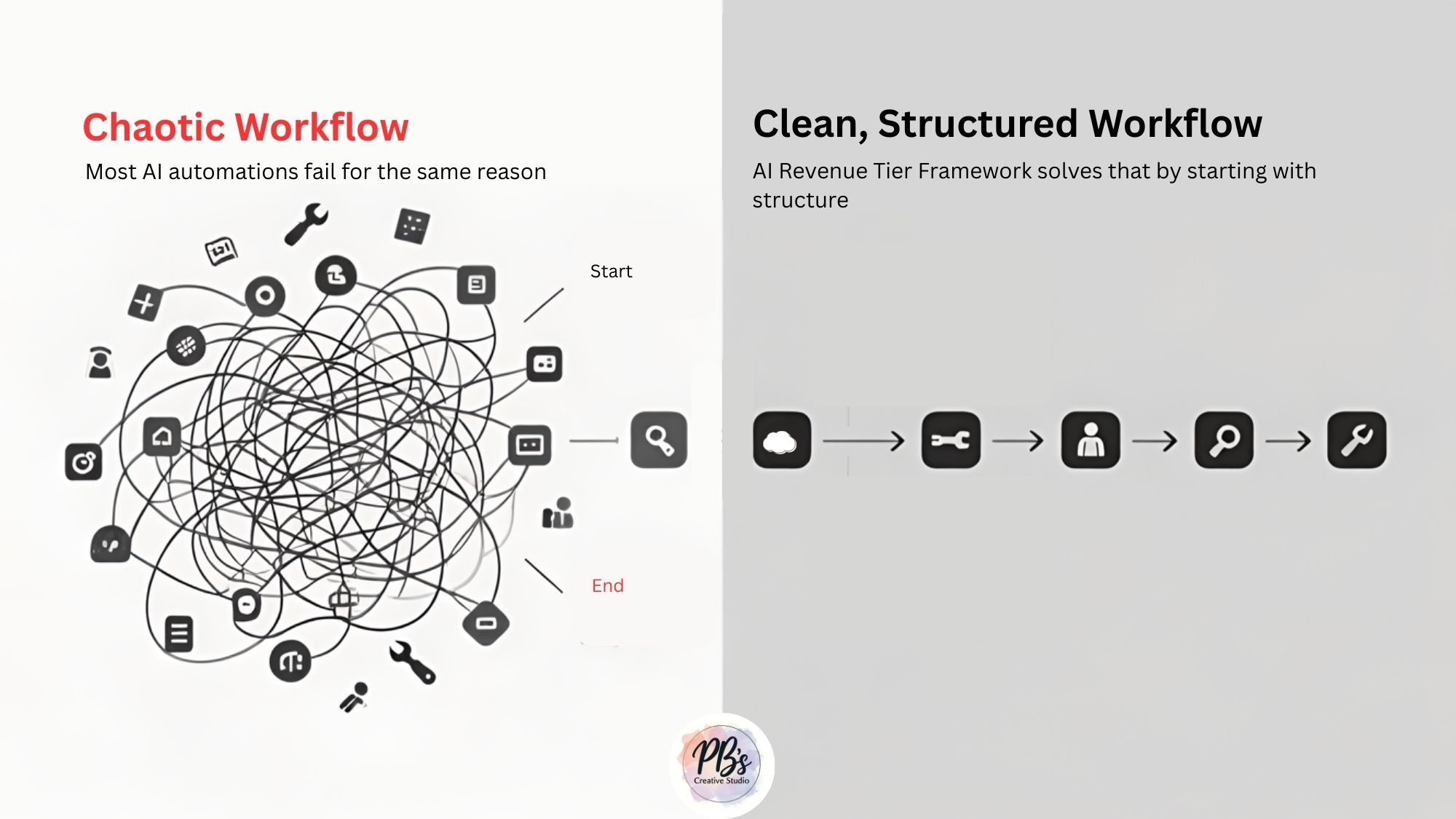
Most people start AI automation by connecting tools. That is why most automations break, sprawl, or quietly waste time. This framework starts somewhere else. It starts with structure.
The Core Idea
Think of AI automation like a factory assembly line.
Not one big machine.
A sequence of specialised stations.
Each station has:
A clear role.
Defined inputs.
Predictable outputs.
When those stations are ordered correctly, automation stops being fragile and starts producing leverage.
The Five Stations of Every Automation System
Below is the complete logic, without tools or configuration.
Just the system.
Trigger
What starts the forkflow
A trigger is the event that initiates movement.
Examples:
A form submission.
A new email.
A calendar booking.
A database update.
If the trigger is unclear, everything downstream suffers.
Filter
What decides whether the flow continues
They answer questions like:
Examples:
Is this valid?
Is this complete?
Is this worth processing now?
Filters are how you protect time, cost and attention..
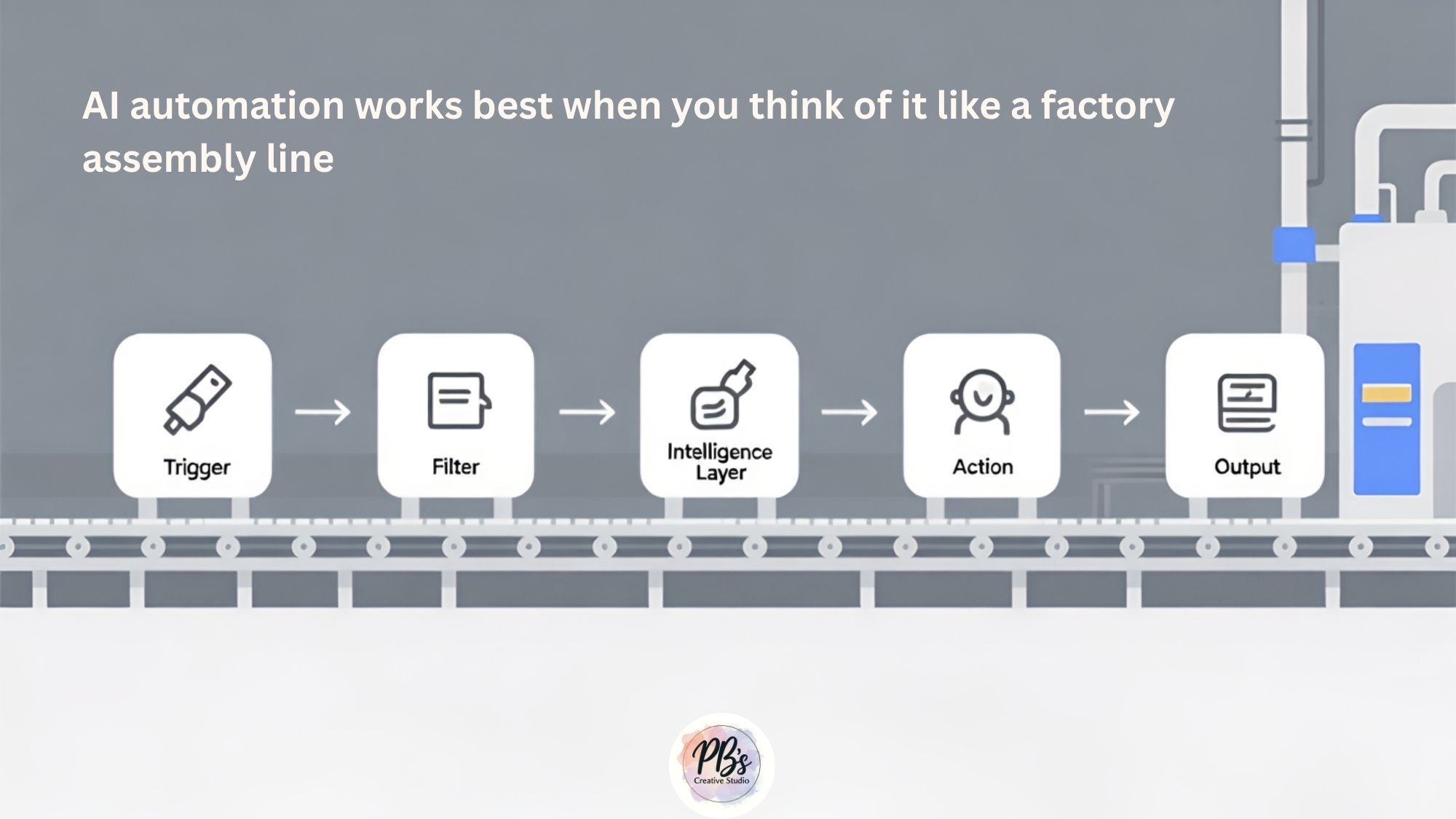
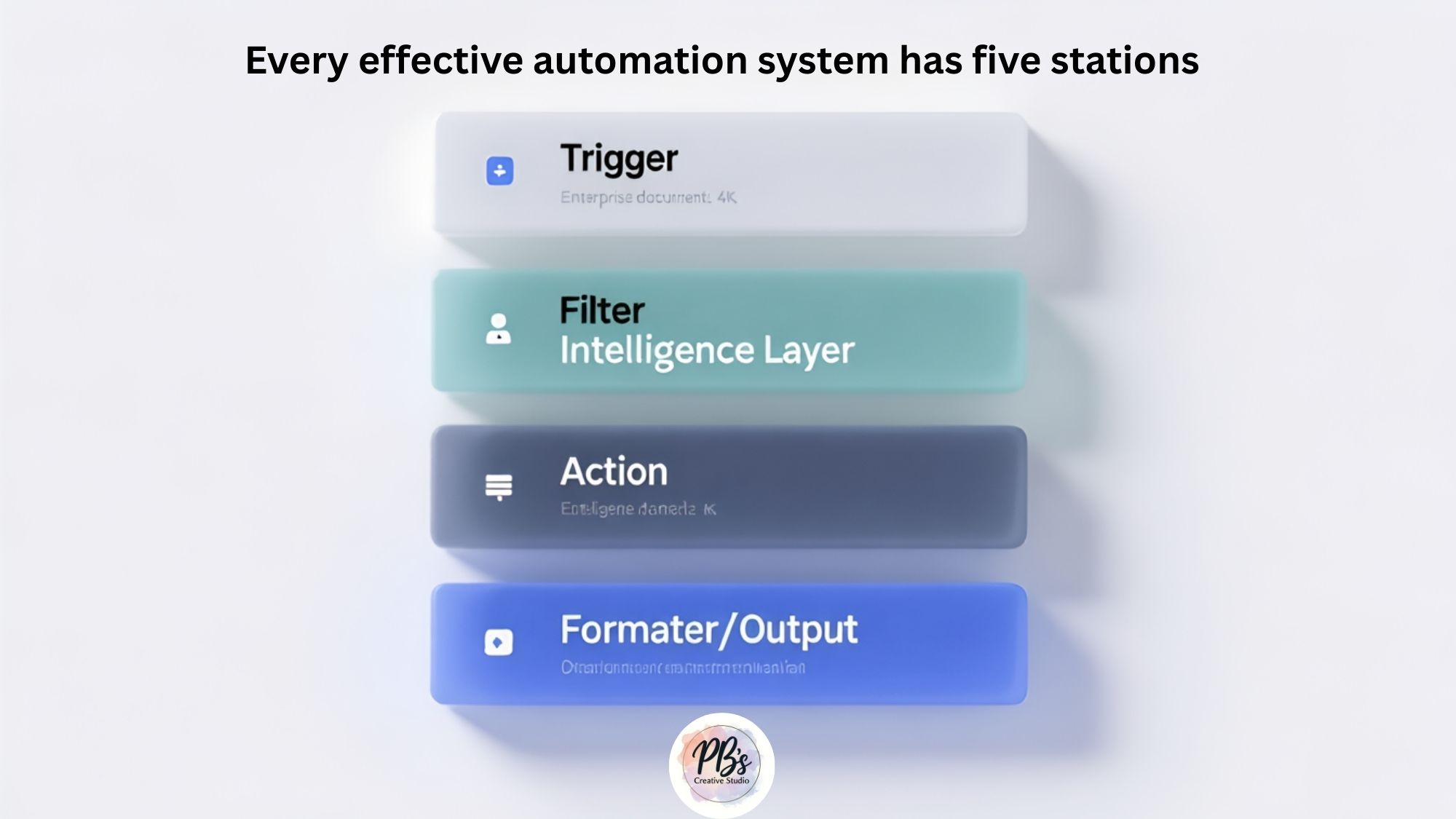
Intelligence Layer
Where thinking happens
This is where AI belongs.
The intelligence layer:
Evaluates context.
Interprets intent.
Makes decisions that humans used to make manually.
This is not about creativity. It is about judgment at scale.
Action
What gets done
Actions are the visible outcomes:
Messages are sent.
Records are created.
Tasks are assigned.
Systems are updated.
Actions should only happen after clarity exists.
Formatter/Output
What leaves the system
The final station ensures:
The data is clean.
The language is consistent.
The outputs are usable by humans or systems.
This is where reliability is preserved.
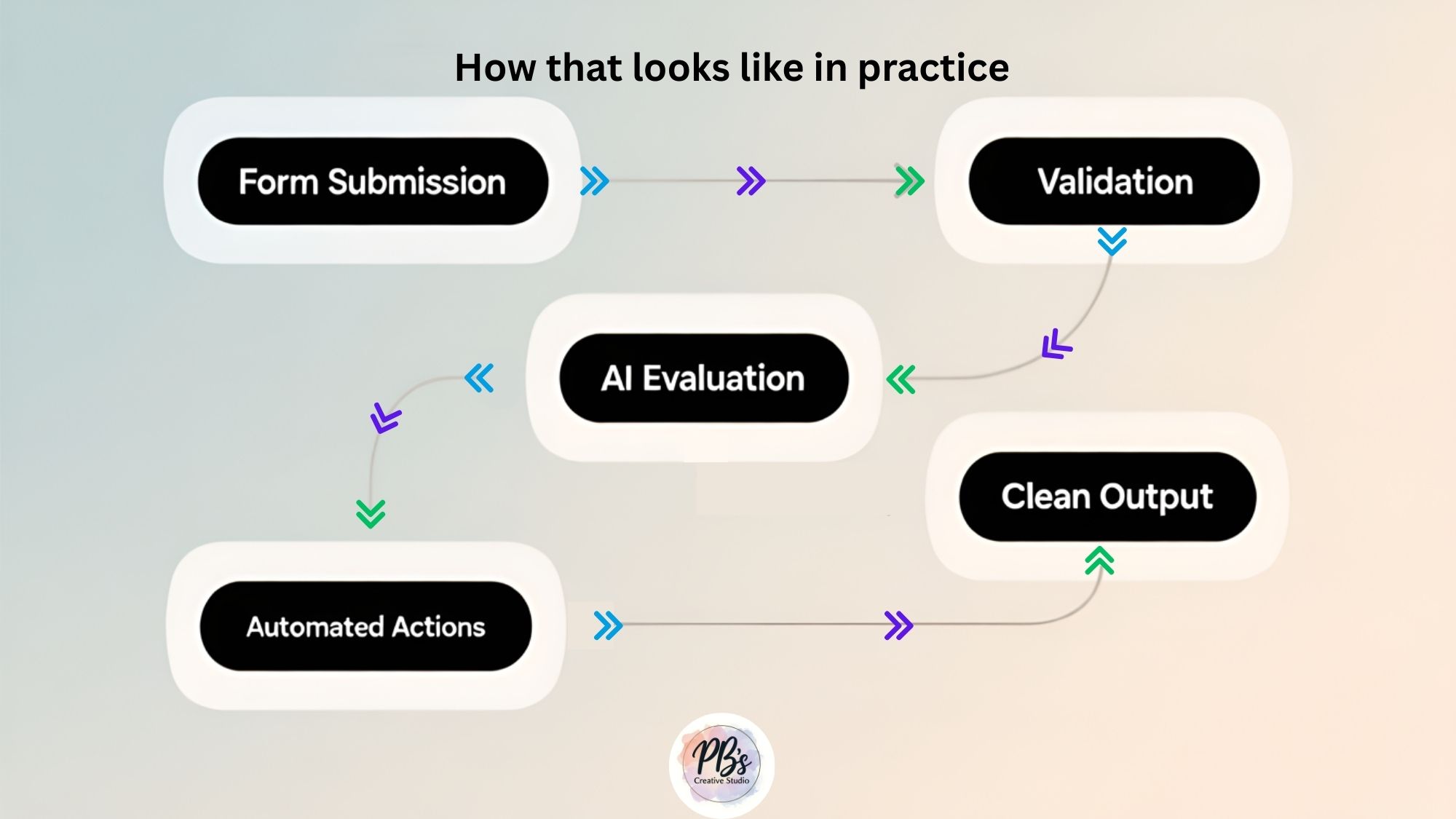
A Simple End-to-End Example
Scenario: A new client enquiry arrives
1. A form submission triggers the workflow
2. Required fields are checked and validated
3. AI evaluates intent and urgency
4. The system sends the right response and logs the record
5. Output is structured, searchable, and ready for follow-up.
No chaos. No manual sorting. No "We will fix it later".
Just a clear and consistent flow.
Where Tools Fit (and Where They Do Not)
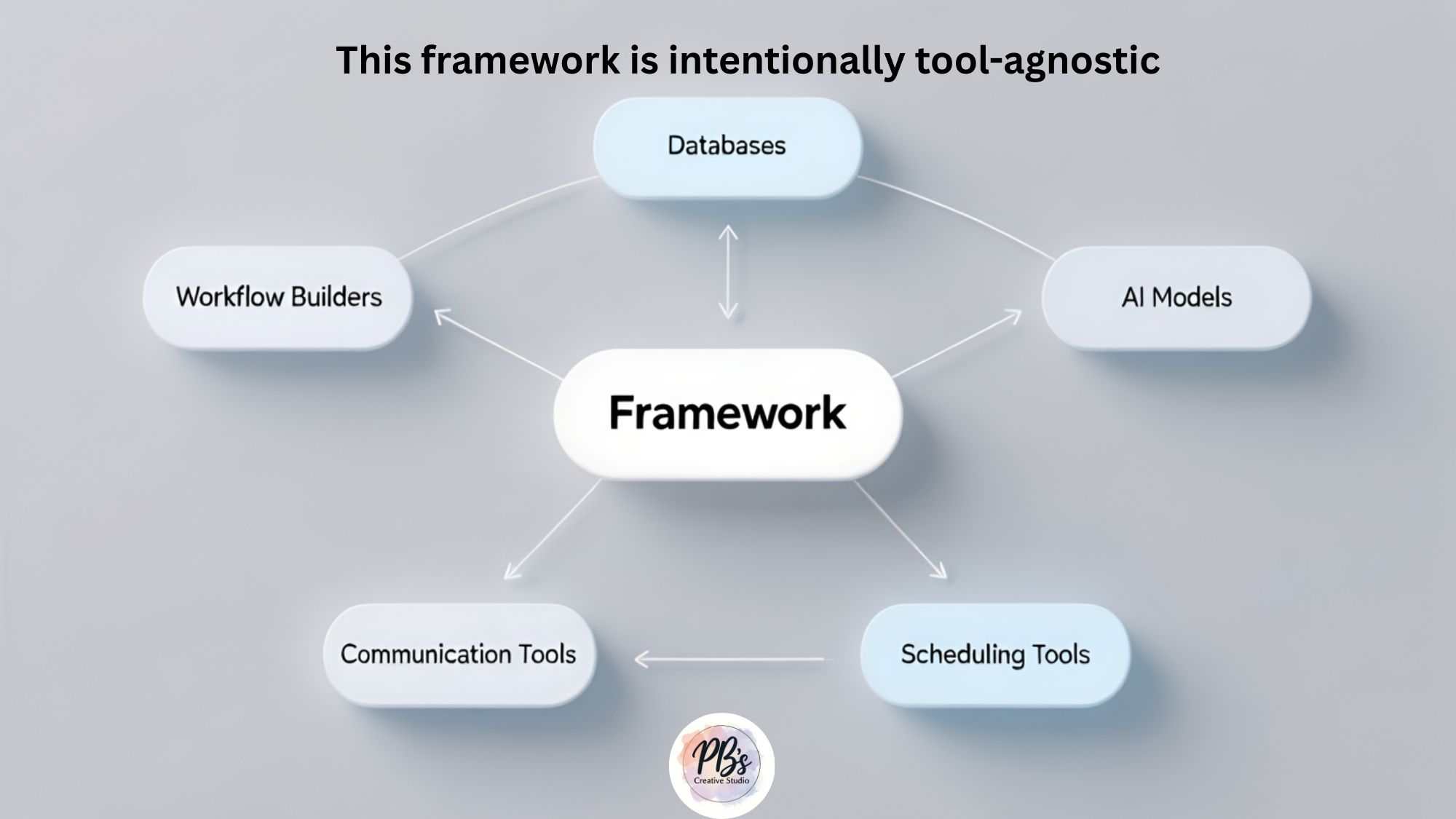
The framework is tool-agnostic.
Tools are chosen after the system is clear.
Typically:
Workflow builders orchestrate the flow
Databases store and organise information
Communication tools deliver outcomes
Scheduling tools manage time
AI models provide reasoning
Tools serve the framework.
They never replace it.
Why This Framework Exists
Most automation failures do not happen during execution.
They happen:
Before the scope is defined
Before decisions are locked
Before responsibility is assigned
This framework forces clarity before work begins.
That is why it scales. That is why it lasts.
That is why it produces revenue instead of complexity.
Who This Is For
This framework is designed for:
Consultants
Founders
Agencies
Operators building repeatable systems
It is not designed for:
Tool collectors
Automation hobbyists
“AI shortcut” seekers
If you build systems that must hold under pressure, this is for you.
What the Full Framework Includes
The complete document expands on:
Revenue-aligned automation tiers.
System design patterns.
Real-world implementation logic.
Decision rules for tool selection.
What you are seeing here is the thinking layer.
The paid framework shows how to apply it.
Ready when you are..
If this way of thinking resonates, the Full Framework is available below.
(Applied Edition with diagrams and examples available separately.)